Gréoux-les-Bains is one of Provence's best-kept secrets: a spa village at 365 metres altitude, set between the Valensole plateau and the Verdon regional nature park, 45 minutes from Europe's largest canyon. Whether you come for a cure, a holiday, or simply a few days' rest, you're on the doorstep of a dozen of southern France's most iconic sites.
This guide doesn't try to list everything — you'll find inventories of fifty villages and thirty activities elsewhere. Instead we've chosen selection: six genuinely unmissable destinations, covered in depth, with the practical tips we'd have liked before our first visit. Distance from Gréoux, best season, recommended duration, pitfalls to avoid.
Why Gréoux is an ideal base
Look at a map of Provence-Alpes-Côte d'Azur and you'll see Gréoux occupies quite a unique position: at the junction of the Verdon regional nature park and the Luberon park, halfway between the Mediterranean and the pre-Alps. That's what has made it, since Roman times, a crossroads and a place of welcome.
In practical terms, from Gréoux you're:
- 15 minutes from the Valensole plateau and its lavender fields
- 20 minutes from Lake Esparron-de-Verdon
- 25 minutes from Manosque
- 30 minutes from Lake Sainte-Croix
- 35 minutes from Moustiers-Sainte-Marie
- 45 minutes to 1 hour from the most spectacular Verdon Gorges viewpoints
- 55 minutes from Aix-en-Provence and 1 hr 15 from the Mediterranean (Cassis)
This central position changes everything for anyone wanting to truly explore the region. Rather than switching accommodation every two days, you settle in once and range out. Morning on the Valensole plateau, afternoon at Lake Esparron, next day in Moustiers and the Verdon. In the evening, back to the calm of an authentic Provençal village.
The Verdon Gorges
Europe's largest canyon
The Verdon grand canyon runs for 21 kilometres between Castellane and Lake Sainte-Croix. Its cliffs can reach 700 metres, towering over a river of turquoise water whose unique colour comes from mineral reflections. It's one of the most striking natural sites in France, compared — not unreasonably — to the American Grand Canyon by the first explorers in 1905.
The must-see viewpoints
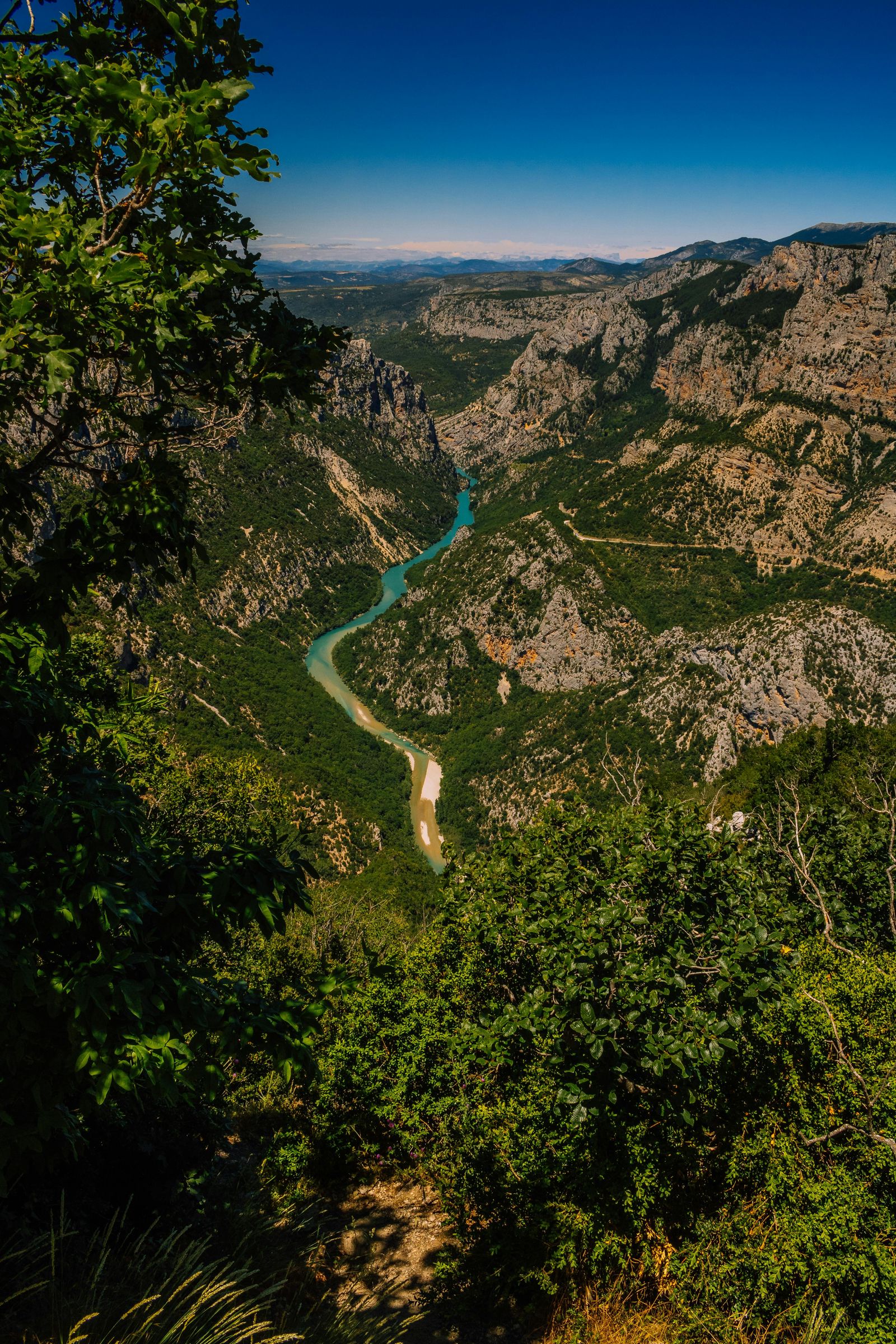
Rather than ticking off all fourteen, focus on the three most spectacular:
- Point Sublime (right bank, near Rougon) — a 5-minute walk from the car park, with a plunging view over the canyon's entrance (Couloir Samson). The easiest and most impressive viewpoint. Best in the early morning.
- The Dent d'Aire viewpoint (Route des Crêtes) — a dizzying 700-metre drop, the most dramatic on the right bank.
- The Balcons de la Mescla (left bank, Corniche Sublime D71) — at the confluence of the Verdon and the Artuby. A panoramic view over a tight bend of the canyon. Quieter than the right bank, and wilder.
For walkers: the Blanc-Martel trail
If you're an experienced hiker, this is the ultimate Verdon experience: 14 to 16 kilometres along the canyon floor, between cliffs and river. Allow 5 to 7 hours of walking, with passages through tunnels (head torch compulsory) and vertiginous staircases. It starts at the Chalet de la Maline and ends at Point Sublime — so plan for the shuttle that runs in season between the two points (otherwise it's a very long drive back).
This is not a family stroll: significant elevation change, fierce summer heat, little accessible water along the way. But it's unforgettable.
For children or gentler walks
- Sentier du Lézard (from Point Sublime) — an educational trail in three separate sections, on wildlife, plants and geology. Family-friendly.
- Sentier du Bastidon — a more accessible alternative to the Blanc-Martel for a taste of the canyon floor.
- A simple short walk at Point Sublime — 5 to 10 minutes from the car park, view guaranteed.
The Valensole plateau and its lavender
Provence's blue ocean
A clay-limestone plateau of 800 km² between the Durance and the Verdon, at the perfect altitude for growing lavender and lavandin. This is the Provence postcard: those blue-violet waves rippling under the mistral, scenting the air for kilometres. Bees hum at work, and farmers harvest from mid-July with large machines (and, more rarely, the traditional sickle).
The best photo spots
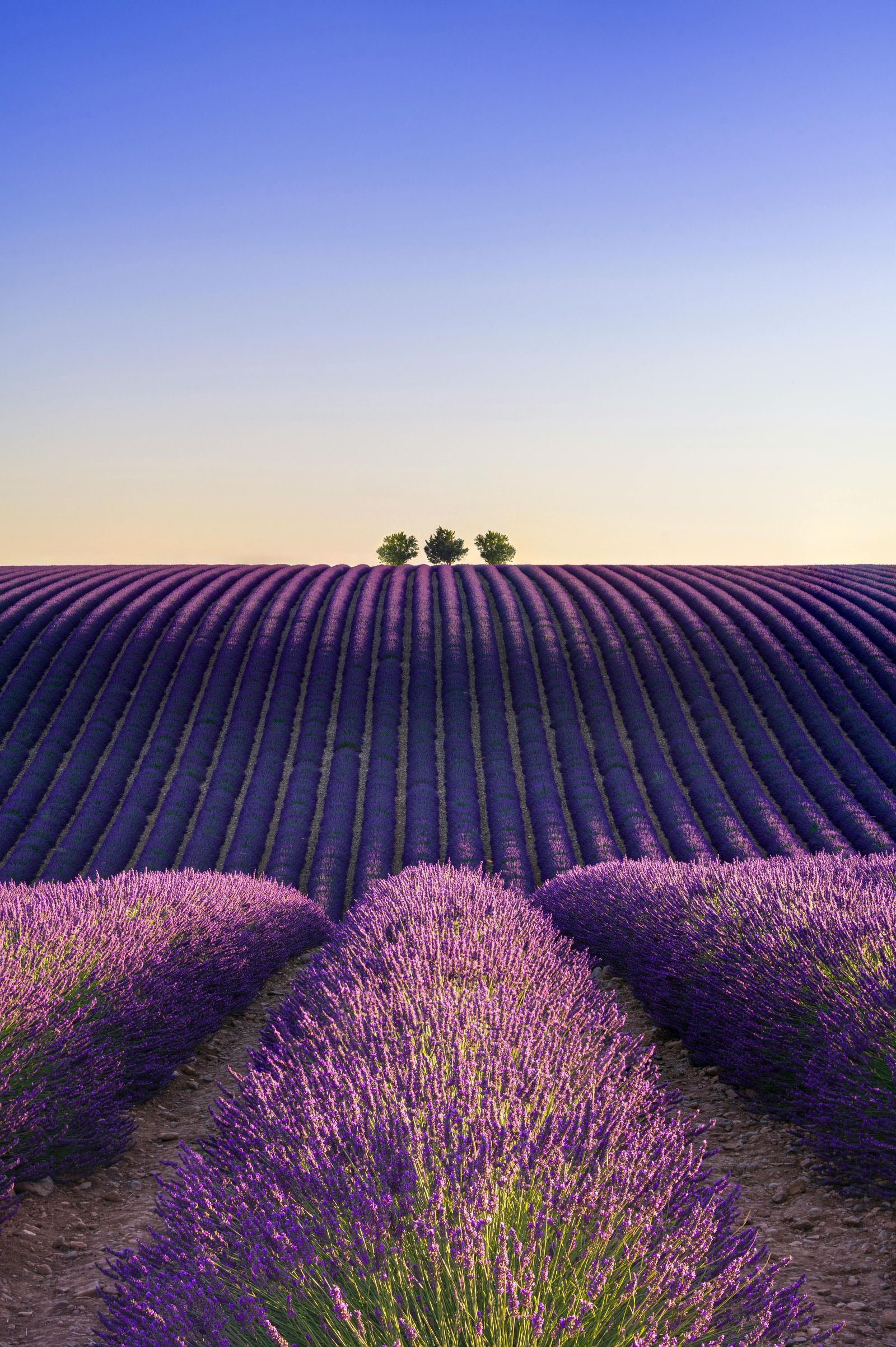
Three tips for bringing back beautiful shots:
- The golden evening hour (between 7pm and 9pm in July) bathes the lavender rows in magical golden light. Early morning works too (8–10am).
- Take the minor back roads around Valensole, Puimoisson and Riez. The most-photographed fields are often packed with tourists; venture off the beaten track and you'll find your own field.
- For a sweeping panorama, climb up to the perched village of Saint-Jurs, which overlooks the plateau.
Beyond the lavender
The plateau has its charms outside the flowering season too:
- March–April: the almond trees in blossom form clouds of pink and white.
- Late summer and autumn: sunflower fields, golden wheat, vineyards.
- All year round: Provençal markets (Tuesday in Riez, Saturday in Valensole), lavender distilleries you can visit (essential oil, honey, soaps), and restaurants serving local produce.
Moustiers-Sainte-Marie
The village suspended between two cliffs
Listed among the Most Beautiful Villages of France, Moustiers is probably the most photographed village in the region — and this time, deservedly so. Tucked against a limestone cliff, its cobbled lanes climb towards a perched chapel. Above, suspended in mid-air between two rocky peaks on a 135-metre chain, gleams the famous star, a historical riddle whose origin is lost between the return of the Crusades and local legend.
What not to miss
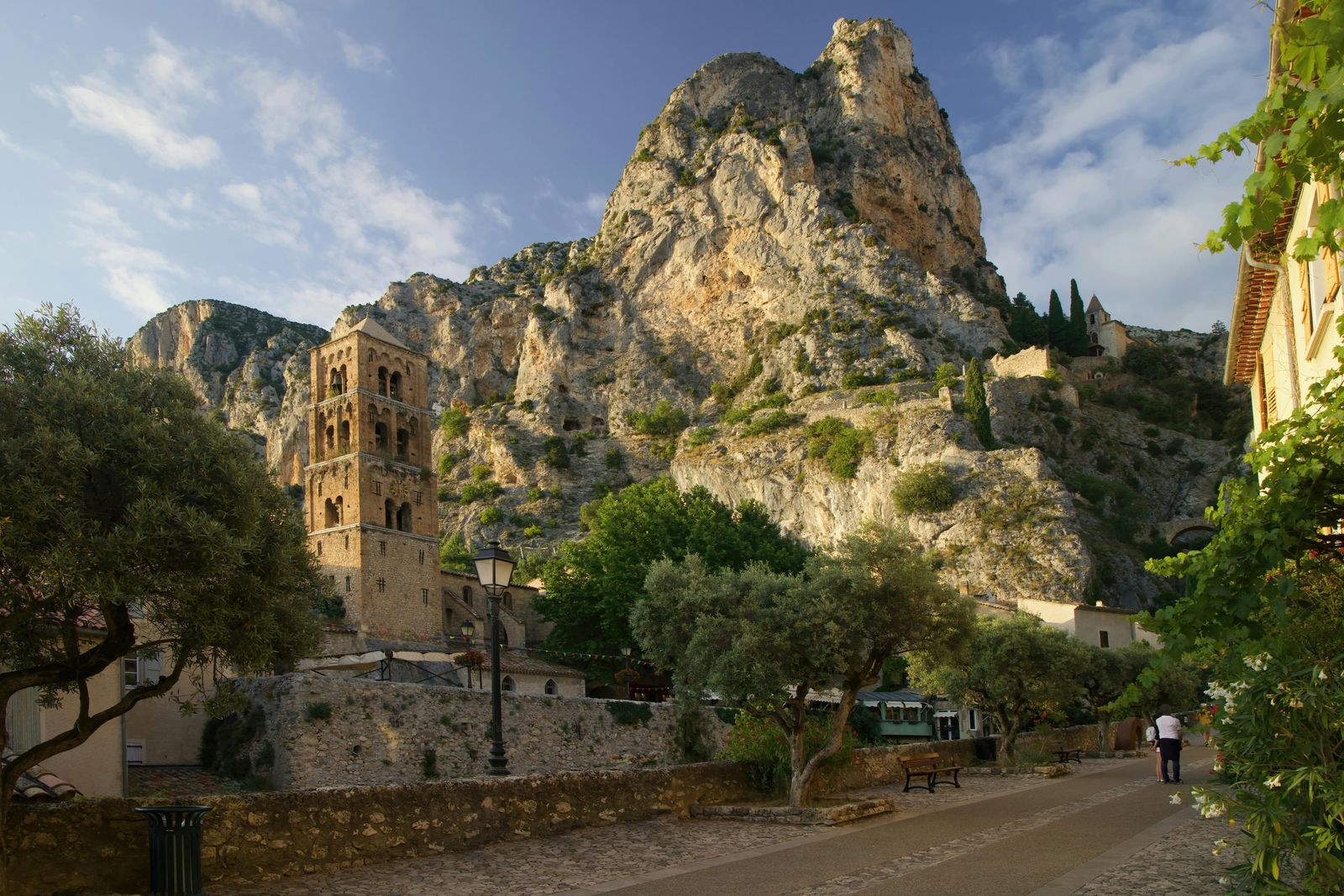
- The Notre-Dame de Beauvoir chapel — reached by 365 steps carved into the rock. Allow 20–30 minutes to climb, depending on fitness. The view from the chapel over the village and valley is spectacular. Lighting a candle is a local tradition.
- The faience workshops — Moustiers has been famous since the 17th century for its blue and polychrome ceramics. Several artisan workshops are open to visit, some letting you watch the wheel in action. The faience museum in the centre tells the story of this local art.
- The fountains and wash-houses scattered through the village, testifying to the importance of water in this part of Provence.
- The Friday-morning market, more authentic than the purely touristy ones.
Eating well in Moustiers
The village has several excellent addresses, from the Provençal bistro to the Michelin-starred restaurant. Booking is essential in high season, especially for lunch. For something simpler, the ice-cream parlours and terraces on the shaded squares do the job nicely.
Lake Sainte-Croix
The gateway to the Gorges from the water
At 22 km² and 90 metres deep, Lake Sainte-Croix is the largest and best-known lake in the region. Created in 1973 by a dam, it offers turquoise water rare at this altitude, equipped beaches, and above all a unique access to the Verdon Gorges from the water. The first kilometres of the canyon, reachable by pedalo or kayak from the Galetas bridge, give a completely different perspective — you're in the canyon, not above it.
The best beaches
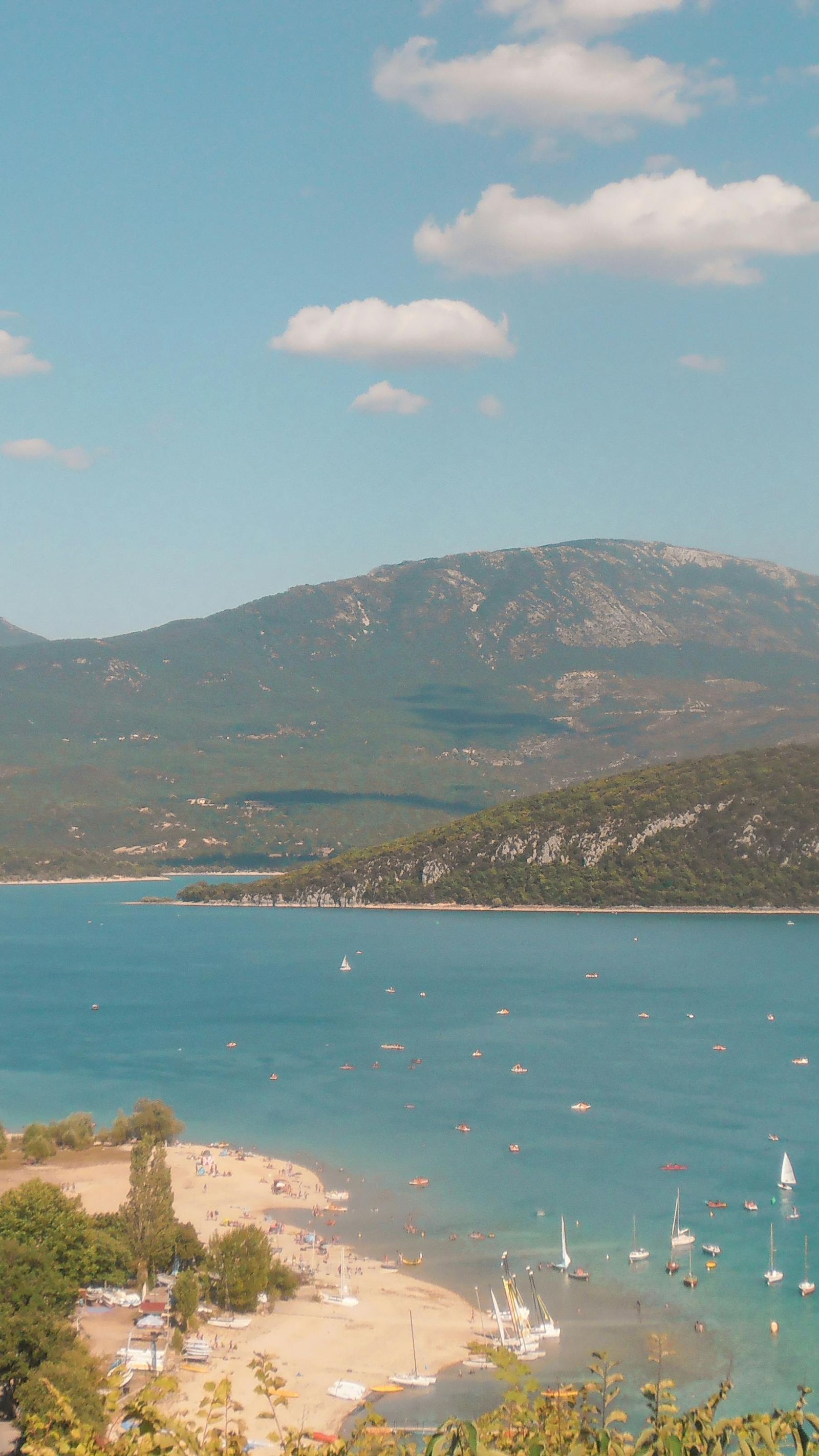
- Sainte-Croix-du-Verdon (north shore) — a perched village with a harbour and beach below, an authentic feel.
- Bauduen (south shore) — a picturesque village with a shaded family beach.
- Les Salles-sur-Verdon — more developed and busier, with restaurants and watercraft hire.
Activities on the water
The lake is an exceptional aquatic playground, with water often at 22–24 °C in July–August:
- Pedalos and electric boats (hire from €25–40/hr depending on season)
- Kayaking and stand-up paddleboarding
- Sailing and windsurfing
- Free swimming at all the equipped beaches
- Petrol-engine boating is banned, which preserves the calm and the water quality
Lake Esparron-de-Verdon
The wild, low-key alternative
Far less known than Sainte-Croix, Lake Esparron is our local favourite for anyone seeking calm. Smaller and wilder, with its creeks and cliffs dropping sheer into turquoise water, it sometimes looks like a Mediterranean fjord. Petrol-engine boating is banned here too, and it's quieter than its big brother, especially outside July–August.
The village of Esparron
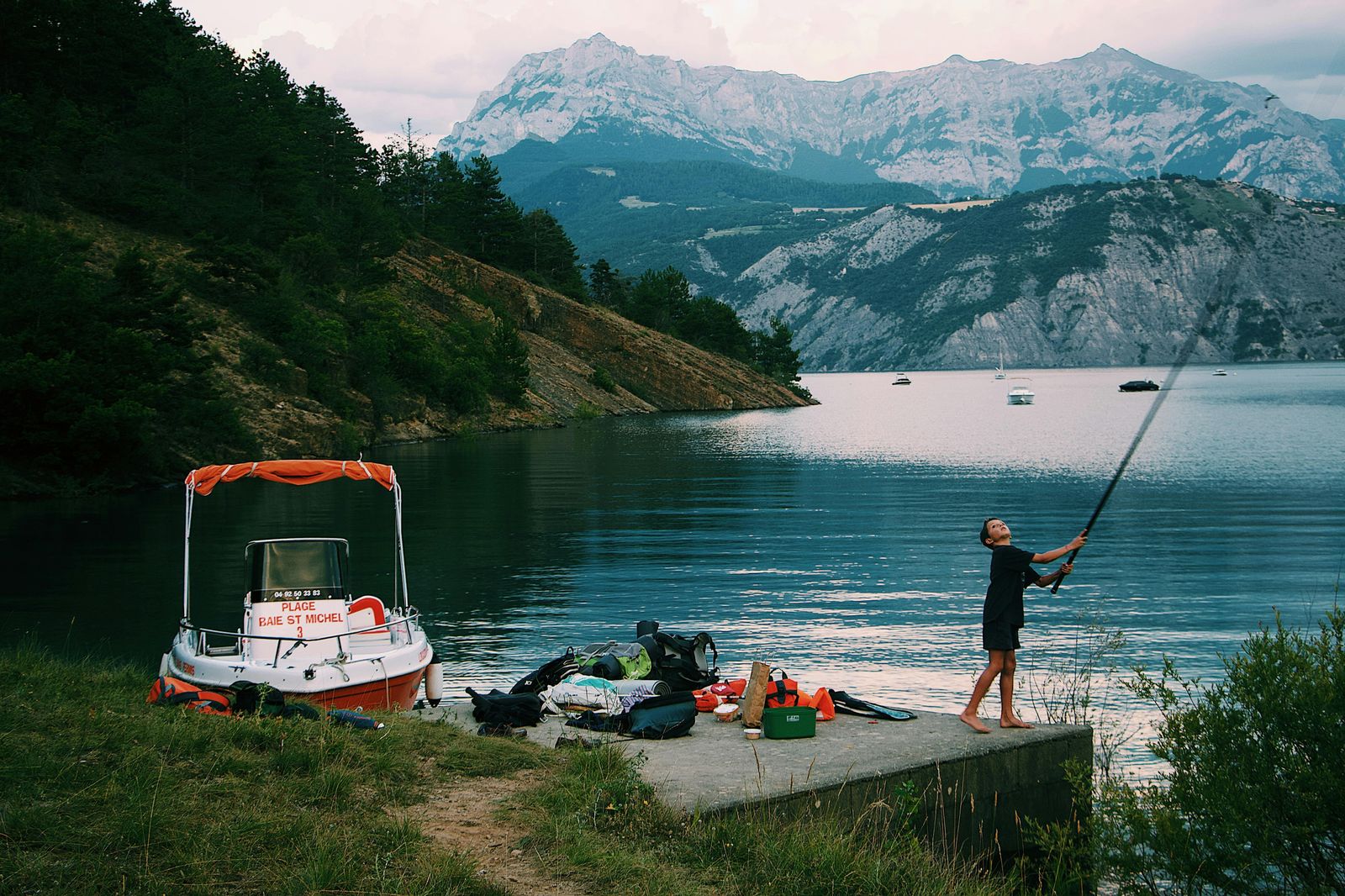
A small Provençal village watched over by its 10th-century castle (still home to the de Castellane family), Esparron-de-Verdon is worth a wander through its lanes before or after a swim. The botanical path around the lake (the “Tour du lac” trail) makes a loop suited to occasional walkers.
On the road between Gréoux and Esparron
Use the trip to pass through Saint-Martin-de-Brômes (12th-century Romanesque church, 14th-century tower) and Allemagne-en-Provence (Renaissance castle with gardens). It's one of the loveliest minor roads in the region, with little tourist traffic.
Manosque, Jean Giono's town
Literary Provence
Manosque is a thousand-year-old town of 22,000 inhabitants, overlooked by the Mont d'Or hill. For many it's above all the town of Jean Giono, who wrote most of his work here — The Horseman on the Roof, Regain, The Man Who Planted Trees. It's also the world headquarters of L'Occitane en Provence, whose factory and museum can be visited.
In Giono's footsteps
- The Centre Jean Giono (in the town centre) — a permanent exhibition on the writer, his life, his work and his landscapes. Modest entry fee. Open all year.
- Le Paraïs, his house on the slope of the Mont d'Or — guided tours on Tuesday and Friday afternoons from mid-June to mid-September, by reservation. This is where he wrote most of his work. The house has been kept just as it was.
What else to see
- The Saunerie and Soubeyran gates — medieval remains of the town walls.
- The Saint-Sauveur church and the chapel of the Sisters of the Presentation, with its “Apocalypse” fresco by the painter Jean Carzou.
- The L'Occitane factory and museum — free visit by reservation, with demonstrations and a factory shop.
- La Maison de la Biodiversité (La Thomassine) — a conservation orchard of old Provençal varieties (apples, pears, almonds...). A remarkable, little-known spot.
Markets and tables
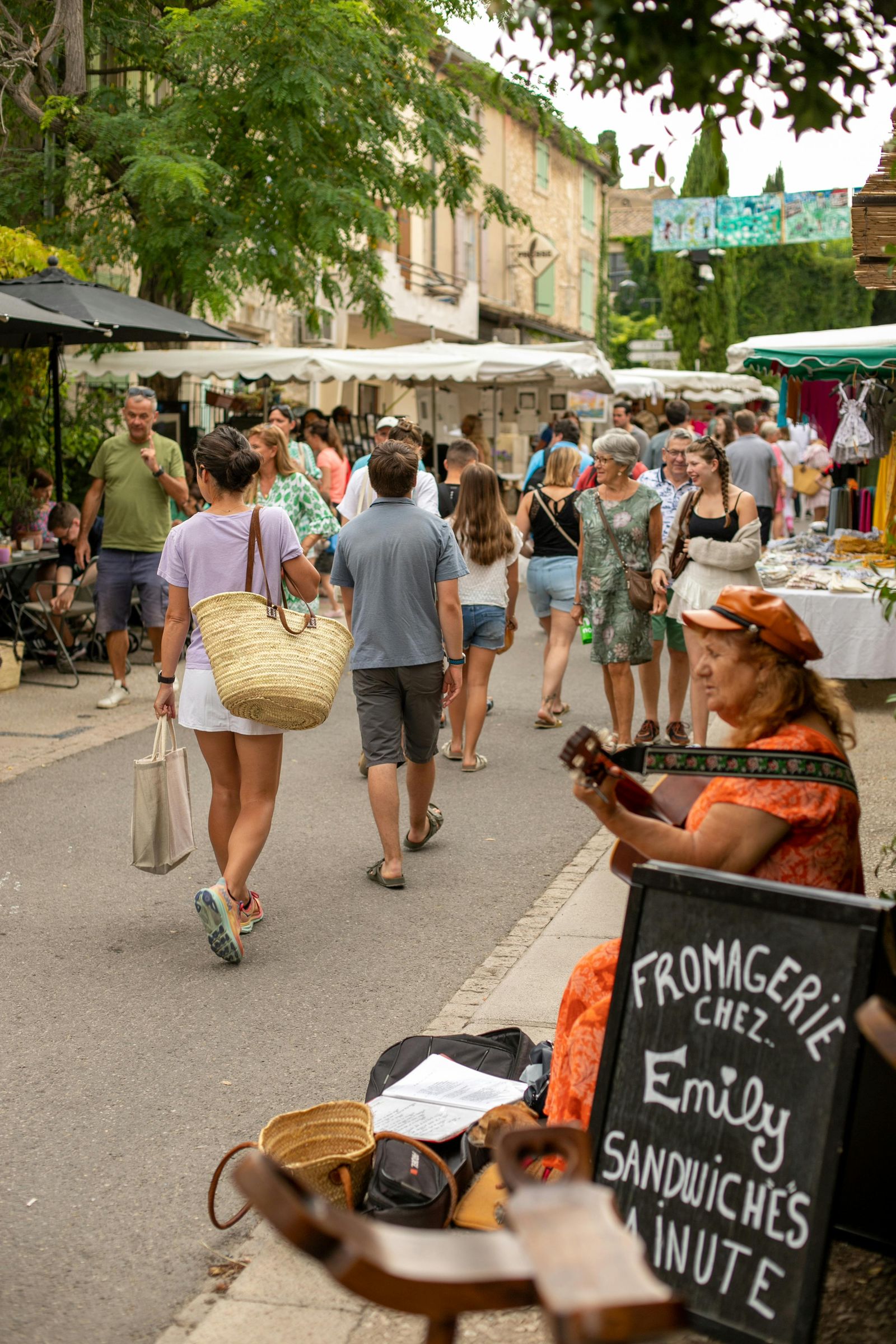
The Saturday-morning market is one of the most authentic in the region, spread through the historic centre. It's a chance to find local produce at reasonable prices (olive oils, cheeses, charcuterie, wines). On the dining side, Manosque has a few good tables without the inflated prices of wholly touristy villages.
When to come: the Haute-Provence calendar
Each season has its jewels and its drawbacks. Here's what to know to choose well.
March–April: the pink awakening
A magnificent, much-underrated period. The almond trees in blossom cover the Valensole plateau in white and pink from late February. Temperatures are mild (12–18 °C), the sites are empty, accommodation is affordable. The Verdon is superb, the river at its highest. One small catch: the Route des Crêtes may still be closed until mid-April.
May–June: in full swing
Our favourite period. Everything is open, temperatures are perfect (18–26 °C), nature bursts with green, the first irises bloom, the bees are busy. The lavender starts flowering around 15–20 June and peaks in the last two weeks of the month. Crowds are reasonable except on long weekends.
July–August: the peak
Magical light, lavender at its height until mid-July, festivals (the Manosque Festival, the Verdon Musical Evenings, etc.), night markets. But also: intense heat (sometimes 35 °C in the afternoon), maximum crowds, full car parks, fully booked restaurants. The Verdon in August calls for an early start (7–8am) to have the viewpoints to yourself.
September: the secret
If you can pick a single period, this is the one. The heat eases, the light turns golden, the lakes are still at 22 °C, the children are back at school, the Verdon viewpoints grow peaceful again. The grape harvest and the first figs. September is the connoisseurs' favourite month.
October: gold and red
Autumn colours on the vines and forests, exceptional light, genuine quiet. The Verdon is still accessible, some restaurants gradually close. The first rains arrive. A great time for hiking and photography without the crowds.
November–February: the Provençal winter
The season of locals and lovers of calm. Many tourist businesses close, some roads are shut, the evenings are short — but the sky is often deep blue, the light crystalline, and the villages recover their soul. In Gréoux, the Thermes close in early December and reopen in March.
Three sample itineraries by time available
You have a free half-day (perfect for spa-goers)
Treatments in the morning, free afternoon. Three options depending on the season and your energy:
- Simplest: leave Gréoux for a short loop via Esparron-de-Verdon. A swim or an electric boat on the lake, returning through the villages of Allemagne and Saint-Martin-de-Brômes. Allow 3 to 4 hours.
- In lavender season (June–July): a tour of the Valensole plateau, photo stops, buying produce from a grower, back to Gréoux. Allow 3 hours.
- Cultural: a visit to Manosque (historic centre, Centre Giono, Saturday market). Allow 3 to 5 hours.
You have a full day
Now you can tackle something serious. Our favourite programme:
- 9am: leave Gréoux for Moustiers-Sainte-Marie (35 min). Explore the village and climb to the Notre-Dame de Beauvoir chapel.
- 12:30pm: lunch in Moustiers, or down to Sainte-Croix-du-Verdon for a meal overlooking the lake.
- 2:30pm: pedalo or electric boat at the Galetas bridge, into the first kilometres of the Gorges from the water.
- 5pm: head back to Gréoux, either across the Valensole plateau in lavender season, or via Aiguines and the Corniche Sublime for a sunset over the canyon.
You have two or three days
You can really do the whole region:
- Day 1: the Verdon in depth — Route des Crêtes in the morning, lunch in La Palud-sur-Verdon, the Corniche Sublime in the afternoon with sunset at the Balcons de la Mescla.
- Day 2: Lake Sainte-Croix — pedalo into the canyon in the morning, lunch in Bauduen, Moustiers in the late afternoon (golden light on the chapel).
- Day 3: the Valensole plateau + Manosque — a tour of the lavender fields at sunrise, a distillery, lunch in Manosque, an afternoon strolling the town and visiting Le Paraïs (by reservation).
In short
Discovering the Verdon and Provence from Gréoux-les-Bains means combining:
- A uniquely central position between the Verdon park and the Luberon park
- Six major sites, all within an hour
- A rare diversity: grand canyon, turquoise lakes, perched villages, lavender plateau, literary town
- A gentle pace: you range out without changing accommodation, and take your time
- Varied seasons that make every period interesting, with a peak in May–June and September
The secret to a fine stay here is not trying to do everything. Choose two or three sites, give them the time they deserve, and keep some time to linger on a village terrace or nap in the shade of the olive trees. It's what the Provençaux have always known.
Your base at Le Clos des Oliviers
Our family has welcomed visitors to Gréoux-les-Bains for over fifty years. Le Clos des Oliviers offers twelve units in a quiet, leafy residence, 500 metres from the Thermes and in the heart of the village — ideal for ranging across all of Haute-Provence.
If you're planning a stay or have questions about the region, don't hesitate — we've been Provençal for four generations and will be glad to point you in the right direction.
📍 Address: 776 avenue des Thermes, 04800 Gréoux-les-Bains
📞 Phone: +33 4 92 70 62 00
✉️ Email: info@leclosdesoliviers.fr